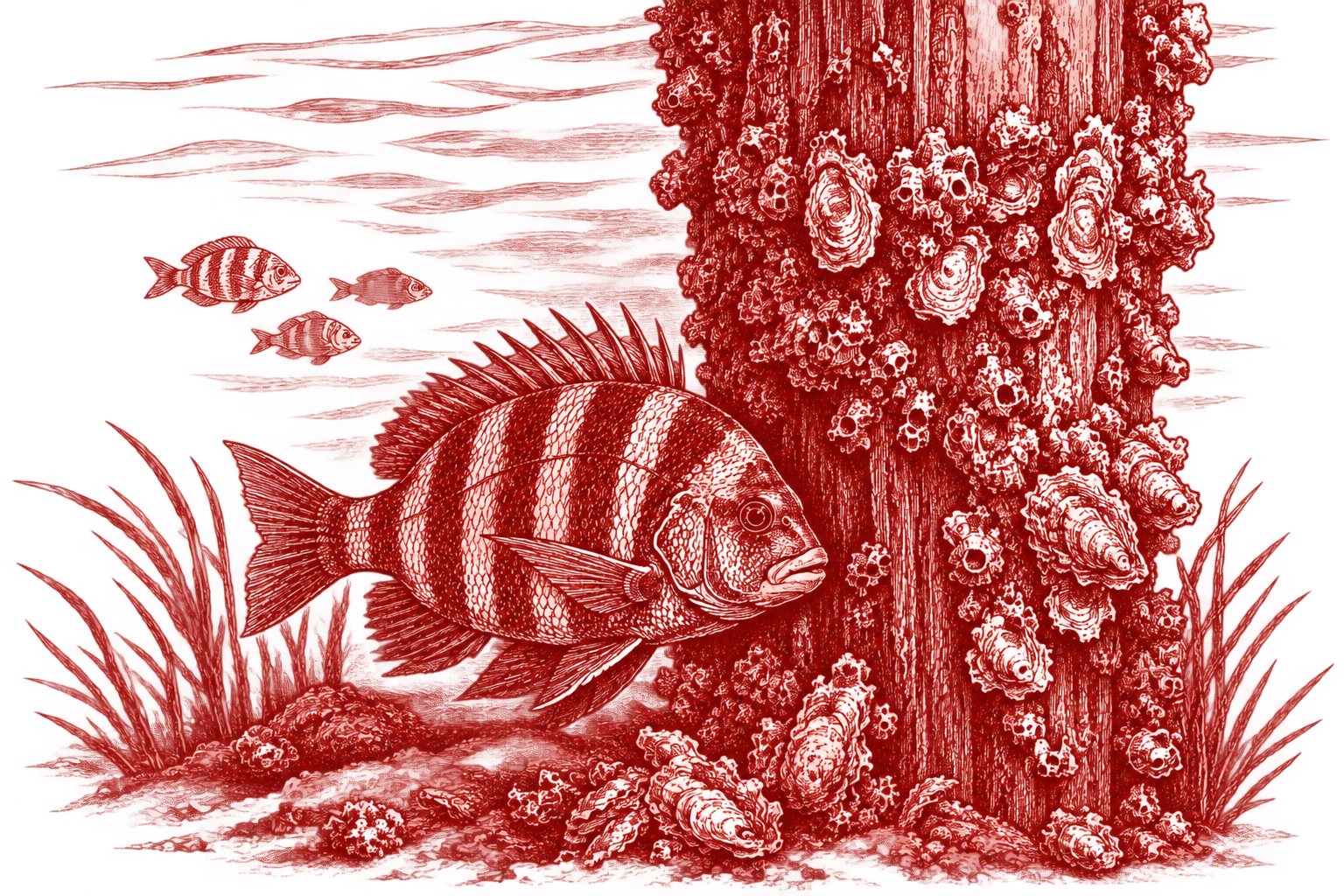
Sheepshead are some of the best-tasting saltwater fish you can catch in South Carolina. They are fun to target, put up a good fight, and can make a great fish fry. However, catching them consistently takes a little more than dropping a piece of bait into the water.
Sheepshead are known for their human-like teeth, strong feeding habits around structure, and ability to steal bait without getting hooked. If you want to catch them, you need to know where to look, what bait to use, and how to present your bait properly.
In this guide, I’ll cover how to catch sheepshead in South Carolina, including the best bait, fishing locations, tides, and rigs to use around docks, bridges, and jetties.
Sheepshead Fishing Regulations in South Carolina
Before heading out, make sure you understand the current South Carolina saltwater fishing regulations.
The South Carolina regulations listing has identified a daily limit of 10 sheepshead per person, not exceeding 30 per boat, with a 14-inch total-length minimum. Regulations can change, so check the current South Carolina Department of Natural Resources fishing regulations before your trip.
If you’re targeting sheepshead for a fish fry, always measure your catch and follow the current size and possession limits.
Best Bait for Sheepshead
One of the best things about sheepshead fishing is that you don’t have to overcomplicate your bait selection. Sheepshead have strong teeth that allow them to crush and feed on hard-shelled creatures such as barnacles, oysters, clams, and crabs.
There are several baits you can use when targeting sheepshead, but if I were planning a trip, I would start with fiddler crabs.
Fiddler Crabs
Fiddler crabs are one of my first choices for sheepshead fishing. They are a natural food source for these fish, and they can be a practical option when fishing around docks, bridge pilings, and other hard structure.
Unlike shrimp, fiddler crabs may help you avoid some of the smaller bait thieves in certain situations. However, no bait is completely immune to pinfish and other fish that can steal it.
Fiddler crabs are often available at bait shops in coastal areas, and they are relatively inexpensive compared to some other bait options. If you’re new to sheepshead fishing, fiddler crabs are a good place to start.
When using them, pay attention to how you hook the crab and keep your bait near the structure where sheepshead are feeding.
Other Baits for Sheepshead
Although fiddler crabs are a great option, they aren’t the only bait you can use. Other baits worth considering include:
- Shrimp: A versatile saltwater bait that can attract several species, including sheepshead.
- Blue crabs: Small pieces of blue crab can be used, but make sure you follow any applicable size and harvest regulations.
- Mud crabs: Another natural food source that can be useful around structure.
- Oysters: Sheepshead are equipped to feed on hard-shelled prey, making oyster-related areas worth targeting.
The best bait can depend on what is available in your area and what the fish are feeding on. However, fiddler crabs are a convenient starting point for many anglers.
Where to Catch Sheepshead in South Carolina
Finding the right location is one of the most important parts of sheepshead fishing. You can have the best bait and the perfect rig, but if you’re not fishing where sheepshead are holding, catching them can be difficult.
Sheepshead are commonly associated with hard structure, including docks, bridge pilings, jetties, and other areas where barnacles, oysters, and other food sources are available.
Having access to a boat or kayak can help you reach more locations, but shore-based anglers can also target sheepshead around accessible structure where fishing is permitted.
Bridge and Dock Pilings
Dock and bridge pilings are some of the first places I would look when searching for sheepshead.
Look for vertical pilings that have barnacles, oysters, or other marine growth attached to them. These structures can provide food and areas where fish hold.
Not every dock is going to be productive, so pay attention to more than just whether a piling is in the water.
Here are a few things to look for:
- Pilings covered in barnacles or oysters.
- Water movement around the structure.
- Depth that allows you to fish your bait effectively.
- Areas where the bottom or nearby structure provides additional habitat.
- A safe and legal location where you can fish.
Does Water Depth Matter?
Depth is something you should consider when choosing a dock or bridge, but there isn’t one specific depth that will always produce sheepshead.
Some locations may hold fish in deeper water, while others can be productive in shallower areas depending on the tide, structure, and conditions.
Areas around Charleston, Edisto Island, Hilton Head, and Fripp Island offer opportunities to fish coastal structure. However, the specific location matters more than simply choosing a name on the map.
Instead of assuming that the deepest dock is always the best, look for structure that provides food, suitable water conditions, and a practical way to present your bait.
Jetties
Jetties are another location worth considering when targeting sheepshead in South Carolina.
The rocks and other hard surfaces around jetties can support marine life that sheepshead feed on. Jetties may also create changes in current and areas where fish can hold near structure.
When fishing jetties, pay attention to the areas where water moves around the rocks. Fish may be holding close to the structure, so presenting your bait in the right location is important.
Jetties can also be dangerous, especially when wet or during rough conditions. Wear appropriate footwear, be aware of waves, and avoid taking unnecessary risks to reach a fishing spot.
Look for Structure Instead of Just Waiting on Fish
One of the biggest mistakes a beginner can make is staying in one location for too long without evaluating whether it is holding fish.
If you’re fishing a dock or bridge piling and aren’t getting bites, consider whether the bait is in the right location, whether your rig is reaching the fish, and whether the current is affecting your presentation.
Learning to identify productive structure and adjust your approach can help you become a more effective sheepshead angler.
Best Time and Tide to Catch Sheepshead
When targeting sheepshead, I would pay close attention to the tide. Time of day matters, but the movement of water around the structure you’re fishing can be an important consideration.
Sheepshead are often targeted around structure where current moves past pilings, rocks, and other habitat. Incoming and outgoing tides can be good opportunities to fish, although the best tide will depend on the specific location.
Incoming vs. Outgoing Tide
Both incoming and outgoing tides are worth trying when targeting sheepshead.
An incoming tide may bring water and food into certain areas, while an outgoing tide can move water away from creeks, marshes, and other coastal locations.
The important thing is to learn how the current moves around the structure you’re fishing. A dock that fishes well on an incoming tide may not produce the same way on an outgoing tide.
Don’t assume that every location has the same ideal tide. Keep track of when you catch fish and pay attention to the conditions.
What About Slack Tide?
Slack tide is the period when tidal current slows or changes direction. It may be less productive in some locations, but that doesn’t mean you should automatically rule it out.
The depth, structure, and location can influence how fish behave during a period of weaker current. If you have limited time to fish, start by identifying the moving-water periods that are most practical for the location you’re targeting.
Best Time of Day
Sheepshead can be caught at different times of day, so you don’t necessarily have to fish only at sunrise or sunset.
If you have the option, you can try fishing during early morning or evening hours when conditions may be more comfortable, particularly during warmer weather. However, I would prioritize the location and tide over following a strict time-of-day rule.
Best Season for Sheepshead
Sheepshead can be targeted throughout the year in South Carolina. However, seasonal conditions can affect where you find them and how you approach fishing.
Late fall through spring can be worth exploring, but you can still catch sheepshead during warmer months. Instead of assuming that one season is the only time to fish, focus on finding suitable structure and adjusting your approach to the conditions.
Best Sheepshead Fishing Rigs
Choosing the right rig can make a big difference when targeting sheepshead. These fish are known for stealing bait, so you want a setup that allows you to keep contact with your bait and detect bites.
There are several rigs you can use, but three options worth knowing are a jig head, Carolina rig, and free-line rig.
1. Jig Head Rig
A jig head is one of the simplest ways to rig a fiddler crab for sheepshead fishing.
You attach the jig head to your leader and hook the fiddler crab onto it. This setup can be useful when fishing vertically around dock pilings, bridge structure, and other locations where you need to keep your bait near the fish.
The appropriate jig head weight depends on the depth and current. Lighter weights may work in shallow water or slower current, while heavier weights can help you maintain control in deeper water or stronger current.
Rather than automatically choosing the heaviest jig head, use enough weight to keep your bait where you need it.
How to Fish a Jig Head for Sheepshead
When fishing a jig head around structure, try to maintain contact with your bait and pay attention to changes in line tension.
Sheepshead can be difficult to hook because they may pick at or crush the bait without giving you a dramatic bite. If you lose contact with your bait, you may miss what is happening below the surface.
Keep your presentation controlled, and avoid allowing your bait to drift farther away from the structure than you intend.
2. Carolina Rig
A Carolina rig is another option for sheepshead fishing, especially when you want to keep your bait near the bottom.
A basic Carolina rig consists of:
- Sliding egg sinker.
- Bead (optional).
- Swivel.
- Leader.
- Hook.
The sliding sinker allows the fish to pick up the bait without immediately feeling the full resistance of a fixed weight. The leader connects the hook to the swivel, while the sinker helps keep the bait in position.
How to Fish a Carolina Rig for Sheepshead
The Carolina rig can be useful when fishing around docks, bridge pilings, and other structure where you need to get your bait down to the fish.
Choose your sinker weight based on the depth and current. You want enough weight to maintain control of your bait without using more weight than necessary.
Your leader length can also be adjusted depending on how you want your bait to sit in relation to the bottom and surrounding structure.
Keep in mind that fishing around rocks, pilings, and other structure can lead to snags. Be prepared to lose tackle and adjust your position if your rig repeatedly gets hung up.
3. Free-Line Rig
A free-line rig is one of the simplest setups you can use. It consists of a hook, leader, and bait without a separate sinker.
This method can work well when fishing shallow water, areas with limited current, or situations where you want to present the bait more naturally.
However, free lining isn’t ideal for every situation. In deeper water or stronger current, it may be difficult to keep your bait where you want it without additional weight.
If you’re fishing a deep dock or an area with significant current, a jig head or Carolina rig may give you better control over your bait.
Hook Size for Sheepshead Fishing
Hook size is another important consideration when rigging for sheepshead.
A hook in the 1/0 to 2/0 range can be a starting point to consider, but the right hook depends on the bait you’re using, the size of the fish you’re targeting, and the particular rig.
Rather than choosing a hook simply because it is large, make sure it works with your bait and allows you to present it effectively.
The hook should be strong enough for the fishing situation, and you should regularly check it for damage or a dull point.
How to Detect Sheepshead Bites
One of the hardest parts of sheepshead fishing is learning to recognize a bite.
These fish can be notorious bait thieves, and a bite may not always look like the obvious strike you would expect from other saltwater species.
When fishing, try to maintain enough contact with your bait to feel changes in line tension. Pay attention to unusual taps, pressure, or movement that doesn’t match the current or the structure you’re fishing.
Don’t assume that every small movement is a fish, but don’t ignore changes in your line either. HOOK SETS ARE FREE!
Learning how to distinguish a bite from the movement of your bait can take practice. The more you fish for sheepshead, the more familiar you can become with how they behave around your rig.
Final Thoughts on Catching Sheepshead in South Carolina
Sheepshead are a great fish to target in South Carolina, especially if you’re looking for a quality fish to bring home for a meal.
The biggest things I would focus on are finding productive structure, using a reliable bait like fiddler crabs, and choosing a rig that allows you to keep your bait in the right location.
You don’t need to overcomplicate sheepshead fishing, but you do need to pay attention to the details. Look for docks, bridge pilings, jetties, and other hard structure. Watch the tide, adjust your weight to the conditions, and learn to recognize those subtle bites.
Once you start understanding where sheepshead hold and how to present your bait, you can become a more consistent angler.
Hopefully, this guide helps you catch some sheepshead and puts a few good fish in the cooler for your next fish fry. Good luck, and tight lines!
Leave a Reply