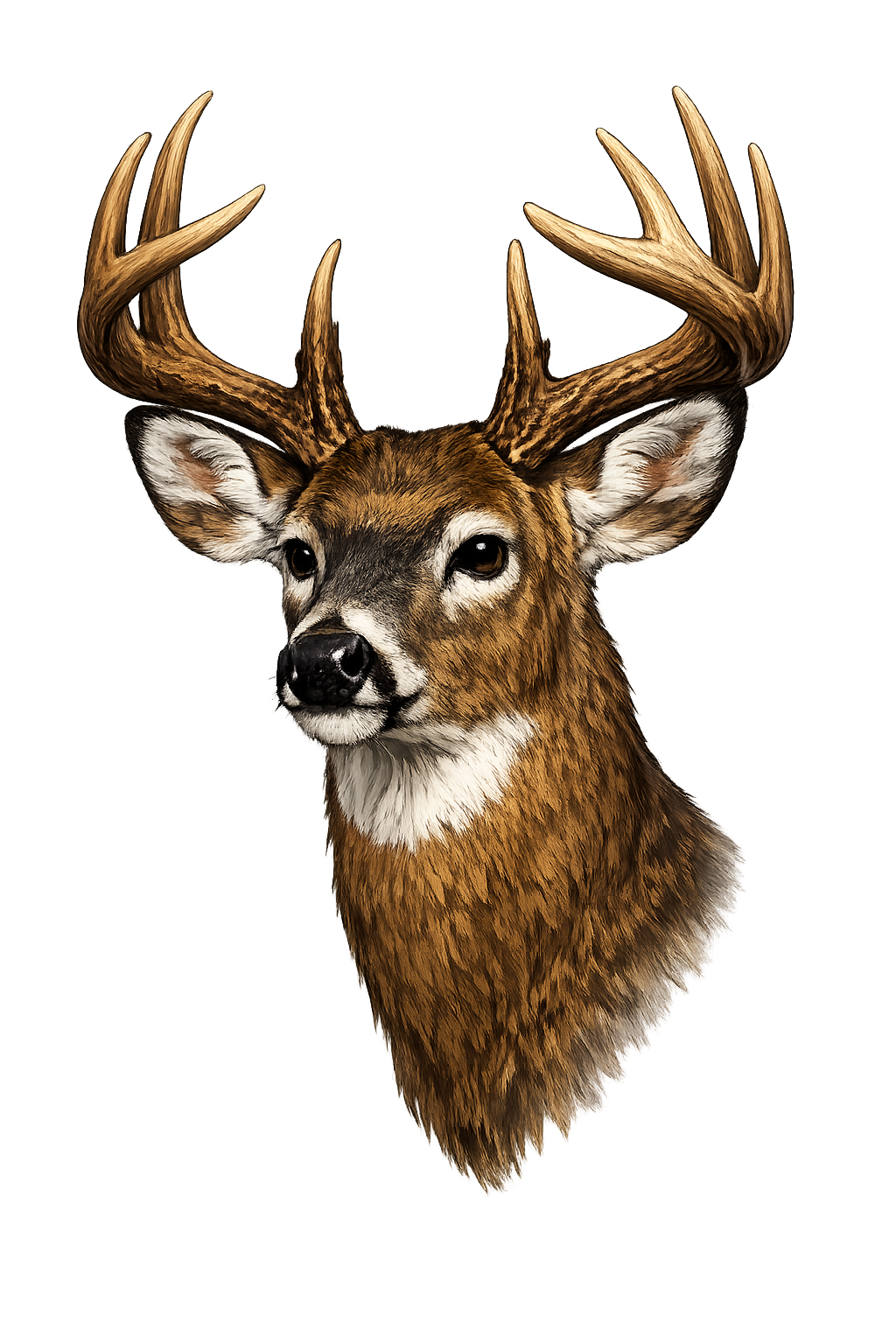
South Carolina is an excellent state for hunting whitetail deer, but hunting them successfully requires more than simply sitting in a tree stand and waiting for a buck to walk by. The state offers an incredible variety of deer habitat, from the mountains and foothills of the Upstate to the agricultural fields of the Piedmont and the swamps, river bottoms, and coastal plains of the Lowcountry.
That diversity is one of the things that makes South Carolina deer hunting so interesting. A strategy that works in a Lowcountry swamp may not work nearly as well in the rolling hardwoods of the Upstate.
If you want to consistently see and harvest whitetails in South Carolina, the key is learning how deer use the particular piece of ground you hunt. Instead of looking for a “magic” stand location, learn to identify bedding areas, food sources, travel corridors, funnels, water, and terrain features that naturally concentrate deer movement.
Understanding South Carolina Whitetails
South Carolina’s whitetail deer live in a wide variety of environments. Depending on where you hunt, you may find deer living in mature hardwood forests, pine plantations, agricultural fields, creek bottoms, thick clear-cuts, swamps, and overgrown powerline corridors.
One of the biggest mistakes a hunter can make is assuming that all South Carolina deer behave the same way.
A mature buck living in a heavily wooded Upstate property may use terrain and thick cover differently than a buck living in agricultural country. Likewise, deer living in the Lowcountry may have access to completely different food and cover than deer in the Piedmont.
The basic needs, however, remain the same.
Deer need food, water, security, and suitable bedding cover. Your job as a hunter is to determine how those resources are connected on the property you’re hunting.
The Three Major Deer-Hunting Regions of South Carolina
One of the advantages of hunting South Carolina is the tremendous variety of habitat found across the state. While deer behavior is never completely predictable, understanding the general characteristics of the region you hunt can give you a better starting point when scouting.
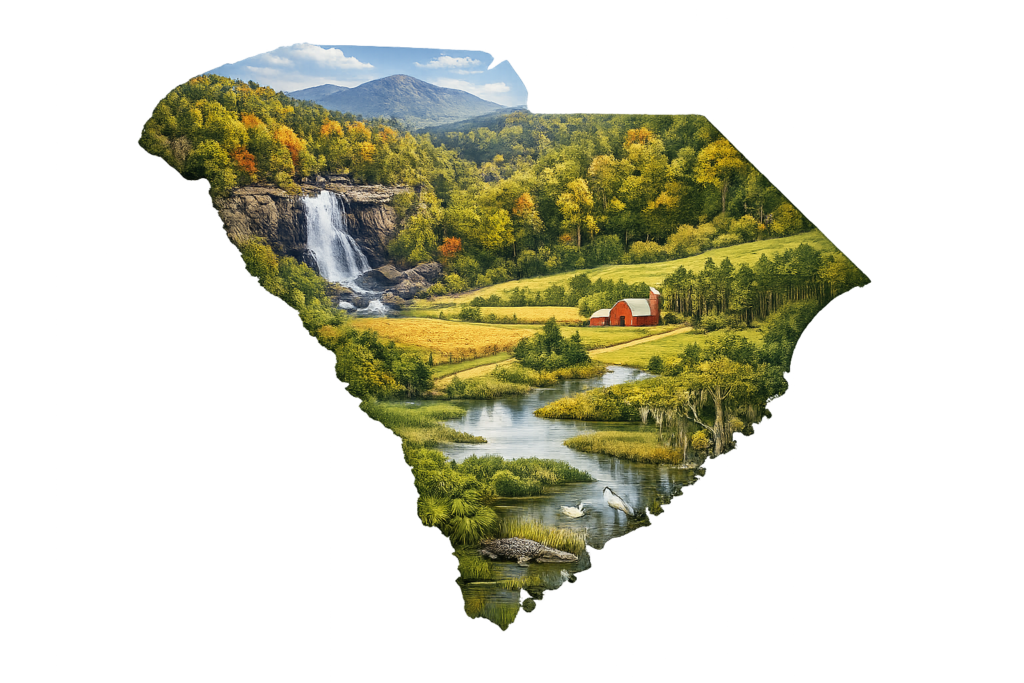
The Upstate
The Upstate is characterized by rolling hills, ridges, steep slopes, hardwood forests, pine stands, creeks, and increasingly fragmented parcels of private land.
In much of the Upstate, terrain can play a major role in determining how deer move.
Ridges, points, saddles, benches, creek bottoms, and steep slopes can create natural travel routes. Deer may use these features to move between bedding and feeding areas while avoiding more exposed terrain.
Thick cover can also be extremely important. Young pine stands, clear-cuts, overgrown fields, and areas of dense vegetation can provide the security mature bucks need during daylight.
If you’re hunting the Upstate, spend plenty of time studying the terrain. A topographic map can reveal potential funnels and travel corridors before you ever step into the woods.
The combination of terrain, thick cover, and hardwood food sources can make the Upstate particularly interesting for hunters who are willing to scout carefully.
The Piedmont
The Piedmont sits between the mountains and the coastal plain and contains a mixture of hardwoods, pine forests, agricultural land, creek bottoms, fields, and developing areas.
This mixture of habitat can create excellent deer movement.
Agricultural fields can provide abundant food, while surrounding timber and thick cover give deer places to bed. The transition between those areas can become especially important.
Look for places where:
- Fields meet timber
- Pine stands meet hardwoods
- Thick cover meets open timber
- Creeks cross travel routes
- Ridges connect bedding and feeding areas
- Powerlines cut through the property
The Piedmont can also provide excellent opportunities on smaller properties. A relatively small tract that contains bedding cover and connects two larger habitat areas can become a valuable part of a deer’s daily movement.
Rather than judging a property simply by its acreage, look at what the property provides and what it connects.
The Lowcountry
The Lowcountry presents a very different hunting environment.
Flat terrain, swamps, river bottoms, marshes, pine forests, agricultural areas, and dense vegetation can all influence deer movement.
Water can become particularly important when trying to understand how deer move through these areas. Higher, drier ground can provide important bedding locations within otherwise wet habitat.
Instead of looking only for obvious trails, pay attention to places where terrain and water force deer into narrower routes.
A strip of higher ground between wet areas, a crossing between islands of cover, or a narrow piece of dry timber surrounded by swamp can function as a natural funnel.
The Lowcountry also contains some tremendous expanses of thick cover. When scouting these areas, don’t assume that deer will always choose the most obvious route. Mature bucks may spend considerable daylight hours in secluded cover and use different routes depending on wind, hunting pressure, food availability, and the time of year.
Why Region Matters
The region you’re hunting should influence how you begin scouting, but it shouldn’t determine your entire strategy.
A good deer hunter learns to read the individual property.
The Upstate may offer more obvious terrain features. The Piedmont may offer a mixture of agriculture and timber. The Lowcountry may contain swamps and isolated areas of higher ground.
But the fundamentals remain the same:
Find where deer feel safe, find where they feed, and figure out how they travel between the two.
Once you understand those three things, the specific geography of South Carolina becomes much easier to hunt.
Start by Scouting Before You Hunt
One of the best ways to improve your deer hunting is to spend more time scouting and less time randomly moving your tree stands.
Before hunting a new property, walk it carefully and look for signs of deer movement.
Look for:
- Deer tracks
- Trails
- Rubs
- Scrapes
- Bedding areas
- Rub lines
- Creek crossings
- Funnels
- Thick cover
- Food sources
- Acorn-producing hardwoods
- Agricultural fields
- Pine thickets
- Powerlines
- Changes in terrain
Don’t just look for the biggest deer sign you can find. Try to understand why the deer are there.
A trail through the woods is useful information, but a trail connecting a bedding area to a feeding area is much more valuable.
Find the Bedding Areas
If you want to understand how a mature South Carolina buck moves, start by finding where he feels safe during daylight.
Deer generally prefer bedding areas that provide security and allow them to detect danger before it gets too close. Thick vegetation, young pine growth, clear-cuts, steep terrain, and secluded areas can all provide excellent bedding cover.
Pay particular attention to places where thick cover meets more open timber.
A mature buck may spend much of the daylight hours in thick cover and then travel toward food as evening approaches.
This is why blindly placing a stand directly over a food source isn’t always the best strategy.
Instead, look for the route between bedding and feeding areas.
Learn How South Carolina Terrain Affects Deer Movement
Terrain can be extremely important in the Upstate and Piedmont regions of South Carolina.
Ridges, points, saddles, creek bottoms, benches, and steep slopes can all influence how deer travel.
Deer often prefer routes that allow them to move efficiently while maintaining some level of security.
A ridge may provide a natural travel route. A steep slope can discourage movement in one direction while concentrating deer into easier terrain. A creek crossing can act as a natural funnel.
This is why studying a topographic map before walking onto a property can be so valuable.
Look for places where terrain naturally forces deer into a smaller area.
Those locations can become excellent ambush points.
Don’t Overlook Powerlines
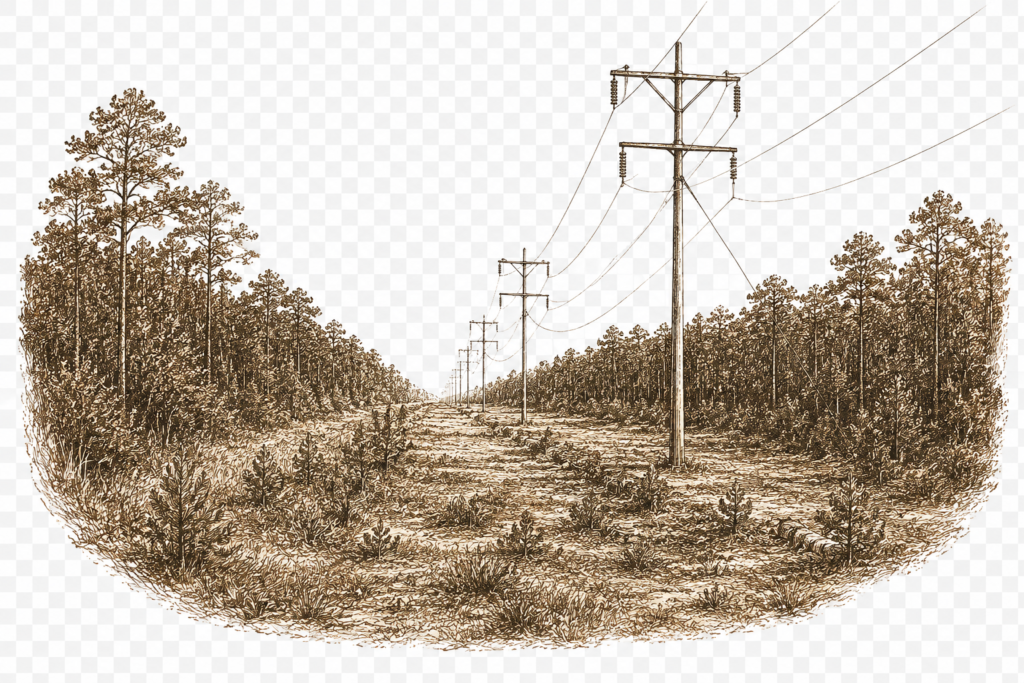
Powerline rights-of-way can be excellent places to hunt South Carolina whitetails.
They often create long strips of vegetation running through otherwise mature timber. Depending on how the right-of-way is maintained, it may provide deer with food, cover, and an easy travel corridor.
The key is not simply to hunt the middle of the powerline.
Look at the edges.
Deer often prefer traveling along the transition between different types of cover. A powerline running alongside thick woods, young pines, or hardwoods can create an especially interesting hunting situation.
Pay attention to trails entering and leaving the powerline.
Those trails can tell you much more than simply seeing deer tracks in the open corridor.
A Lesson From Experience: Hunt the Powerlines
One piece of advice that stuck with me came from an old boss of mine who had been hunting South Carolina deer for decades. He used to say:
“Deer hunting has become easy for me, and it’s because I always hunt the powerlines. One way or another, the deer have to cross the powerlines eventually.” -Old Bossy Head
At first, it sounds overly simple—but there’s truth in it.
Powerlines act like forced travel corridors. They cut through bedding cover, connect habitat types, and create long, open travel routes that deer must cross or travel along. Whether a deer is moving from bedding to food, shifting between doe groups, or cruising during the rut, sooner or later it often intersects a powerline.
The key isn’t just sitting anywhere on the right-of-way—it’s identifying where those crossings naturally happen: pinch points, edge transitions, and trail intersections. When you start thinking of powerlines as unavoidable travel highways instead of just open ground, they become one of the most predictable places to intercept deer movement.
Hunt the Wind
You can have the best stand location on the property and still ruin it if the wind is wrong.
Whitetails have an incredible sense of smell, and mature bucks in particular can become extremely difficult to kill when they detect human scent.
Before climbing into a stand, determine where your scent will travel.
Don’t simply ask:
“Is the wind blowing toward the deer?”
Ask:
“Where could a deer be located while I’m sitting here?”
A buck may approach your stand from an unexpected direction. A swirling wind can also cause problems even when the forecast appears favorable.
Whenever possible, position your stand so your scent is carried away from the areas you expect deer to approach from.
Wind should influence where you hunt, when you enter the woods, and sometimes whether you hunt a particular stand at all.
Hunt the Edges
South Carolina has plenty of habitat transitions that can concentrate deer movement.
Look for places where:
- Hardwood meets pine
- Thick cover meets mature timber
- Clear-cut meets woods
- Fields meet woods
- Powerlines meet timber
- Swamps meet higher ground
- Young pines meet mature timber
These transitions provide deer with access to multiple resources in a relatively small area.
A mature buck doesn’t necessarily need to walk through the middle of a field to use it. He may travel along the edge, especially during daylight.
This makes edges some of the most valuable places to investigate when scouting a property.
Pay Attention to Acorns
Hard mast can have a tremendous influence on deer movement.
When white oaks and other preferred hardwoods are producing acorns, deer may spend considerable time feeding beneath them.
Instead of simply looking for the biggest oak tree on the property, look for the trees that are actually producing.
Walk beneath the canopy and look for fresh acorns, tracks, droppings, and disturbed leaves.
If you find a productive oak surrounded by thick cover and fresh deer sign, you may have found an excellent hunting location.
However, remember that food sources can change throughout the season.
A stand that is excellent in October may become much less productive later in the season when deer change their feeding patterns.
The Rut
Hunt the Pre-Rut
The pre-rut can be an exciting time to hunt South Carolina whitetails.
As the breeding season approaches, bucks begin increasing their movement and interacting more with does.
You may begin finding fresh scrapes and rubs appearing throughout the property.
Don’t assume that every scrape is equally important.
Look for scrape lines, large community scrapes, and scrapes located along travel corridors.
A scrape located beside a major travel route can tell you much more than an isolated scrape in the middle of the woods.
Hunt the Rut
During the rut, bucks can become much less predictable.
A mature buck that normally moves primarily after dark may suddenly appear during daylight as he searches for receptive does.
This is one of the reasons the rut can be such a productive period for hunters.
Instead of focusing exclusively on food, start looking for areas where bucks are likely to encounter does.
Doe bedding areas can become particularly important.
If you can identify where does are bedding and determine how bucks are approaching those areas, you may be able to intercept a mature buck during daylight.
Don’t Ignore the Post-Rut
After the rut, deer eventually return to more predictable patterns.
Bucks have expended significant energy during the breeding season and may begin focusing heavily on food and security.
This is a good time to return to the fundamentals.
Find the best remaining food sources.
Find the thickest cover.
Look for fresh tracks and trails.
Then determine how deer are moving between those areas.
Sometimes the best late-season stand is not the same stand that produced during the rut.
Morning vs. Evening Hunts
Both morning and evening hunts can be productive, but they require different strategies.
Evening hunts are often excellent when deer are moving from bedding areas toward food.
Morning hunts can be more difficult because you must enter the woods without disturbing deer that are already moving.
For morning hunts, consider setting up closer to bedding areas rather than directly on feeding areas.
The goal is to intercept deer before they reach their bedding area.
However, this requires careful access.
A great morning stand can become a terrible stand if reaching it requires walking through the area where deer are bedding.
Hunt the Property Without Overhunting It
One of the easiest ways to ruin a good deer hunting property is to hunt it too aggressively.
Every time you enter the woods, you potentially leave scent, make noise, and disturb deer.
This becomes especially important when hunting mature bucks.
You don’t need to hunt every stand simply because it exists.
Instead, choose your hunts based on conditions.
If the wind isn’t right, stay out.
If entering a stand will likely push deer out of the area, wait.
If a particular stand is best under a certain wind direction, save it for that condition.
Think of your hunting property as a limited resource.
Your goal isn’t to hunt as many days as possible.
Your goal is to hunt the right days.
Use Trail Cameras Wisely
Trail cameras can be extremely useful for understanding deer movement.
Place cameras near:
- Major trails
- Scrapes
- Food sources
- Water
- Funnels
- Field edges
- Powerline crossings
- Bedding-area entrances
However, don’t become completely dependent on cameras.
A trail camera can tell you that a buck is using an area, but it doesn’t necessarily tell you exactly how to kill him.
Your job is to combine camera information with observations of terrain, wind, bedding, food, and travel patterns.
Don’t Underestimate Small Properties
You don’t need hundreds of acres to kill a mature South Carolina buck.
Small properties can actually be excellent hunting locations when they contain the right combination of habitat.
A 20-acre property with thick bedding cover, food, water, and a travel corridor may hold more useful deer movement than a much larger property with poor habitat.
The challenge with small properties is that deer may travel across property boundaries.
This makes understanding neighboring properties important.
Pay attention to where deer are coming from and where they’re going.
If your property provides bedding cover while a neighboring property provides food, you may have a natural travel corridor running through your land.
Think Like a Deer
The most important lesson in South Carolina deer hunting is simple:
Stop asking where you would walk and start asking where a deer wants to walk.
A deer doesn’t care where your tree stand is.
He doesn’t care where you want him to travel.
He is trying to survive.
He wants food.
He wants security.
He wants to avoid predators and people.
He wants to reach bedding and feeding areas while minimizing exposure.
If you can understand those priorities, you can begin predicting his movements.
Final Thoughts
Successful whitetail hunting in South Carolina isn’t necessarily about having the most expensive equipment, the biggest food plot, or the newest tree stand.
It starts with learning the land.
Scout your property. Find the bedding areas. Identify food sources. Study the terrain. Look for funnels and travel corridors. Pay attention to wind direction. And most importantly, avoid putting unnecessary pressure on the deer you’re trying to hunt.
South Carolina offers an incredible variety of whitetail habitat, and every property has its own unique characteristics. The more time you spend learning your particular piece of ground, the better you’ll become at predicting where deer will be during daylight.
The goal isn’t simply to find deer.
The goal is to understand why they are there.
Once you understand that, you can begin hunting them with a purpose rather than simply sitting in a stand and hoping a buck walks by.
Leave a Reply