Getting started with surf fishing doesn’t have to be expensive. One of the biggest misconceptions new anglers have is that they need hundreds of dollars worth of gear before making their first cast. The truth is, you can catch everything from whiting and pompano to redfish and sharks with a simple setup that won’t break the bank.
This surf fishing gear checklist covers everything beginners need to get started. By focusing on the essentials, you’ll spend less money on unnecessary equipment and more time catching fish.
1. Rod and Reel
The rod and reel are the foundation of your surf fishing setup, so it’s worth choosing something versatile enough to handle a variety of species.
For beginners, a 10-foot medium-heavy surf rod is one of the best all-around options. It casts farther than shorter rods, handles rough surf well, and has enough backbone to fight larger fish while still being sensitive enough for smaller species.
Pair that with a 6000-8000 size spinning reel. This size offers plenty of line capacity and drag without feeling overly bulky.
When shopping for a beginner setup, look for:
- Corrosion-resistant components
- A smooth drag system
- Comfortable grip
- Good casting distance
- Durable construction
One combo that checks all of those boxes is the Penn Pursuit V 8000 paired with a 10-foot rod. It offers excellent value for new anglers and is capable of handling nearly every species you’ll encounter while surf fishing.
2. Fishing Line
One of the biggest debates in surf fishing is monofilament vs. braided line.
Monofilament
Monofilament is inexpensive, forgiving, and stretches under pressure. That stretch helps absorb the shock of powerful fish and rough waves, making it a great choice for beginners.
Braided Line
Braided line offers better casting distance, increased sensitivity, and a much smaller diameter for its strength. The downside is that it costs more and usually requires a leader.
For most beginners, either option works well.
A good starting point is:
- 15-20 lb braid
- 15-20 lb monofilament
Both provide enough strength for common surf species while still allowing long casts.
3. Terminal Tackle
You don’t need dozens of tackle boxes filled with gear. A few proven pieces of terminal tackle will catch fish almost anywhere.
Circle Hooks
Circle hooks are beginner-friendly because they usually hook fish in the corner of the mouth, making releases easier and improving hookup percentages.
Pyramid Sinkers
Pyramid sinkers are designed to dig into the sand and keep your bait from rolling with the waves. They’re one of the most commonly used sinkers for surf fishing.
Carry several different weights since surf conditions change daily.
Leader Material
A spool of fluorocarbon or heavy monofilament leader is useful for replacing worn leaders and tying your own rigs when needed.
High-Low Rig
One of the easiest and most productive rigs for beginners is the High-Low Rig.
It keeps two baits just off the bottom and works exceptionally well for whiting, croaker, pompano, and many other surf species.
Fish Finder Rig
If you’re targeting larger fish like redfish, black drum, or sharks, the Fish Finder Rig allows the fish to pick up the bait without immediately feeling the sinker’s weight.
If you don’t want to tie your own rigs, most local bait shops sell both High-Low and Fish Finder rigs already assembled and ready to fish.
4. Bait
Fresh bait consistently outfishes artificial lures for most beginner surf anglers.
Some of the best options include:
- Fresh shrimp
- Sand fleas (mole crabs)
- Fresh cut mullet
Whenever possible, choose fresh bait over frozen. Fresh bait has more scent, better texture, and generally attracts more bites.
That said, frozen bait still catches plenty of fish and is perfectly fine if fresh isn’t available.
5. Basic Tools
A few simple tools make every trip easier.
Fishing pliers help remove hooks, crimp split shot, and cut braided line.
A sharp knife is useful for cutting bait, trimming leaders, and cleaning fish after a successful day.
These two tools are inexpensive but quickly become some of the most-used items in your tackle bag.
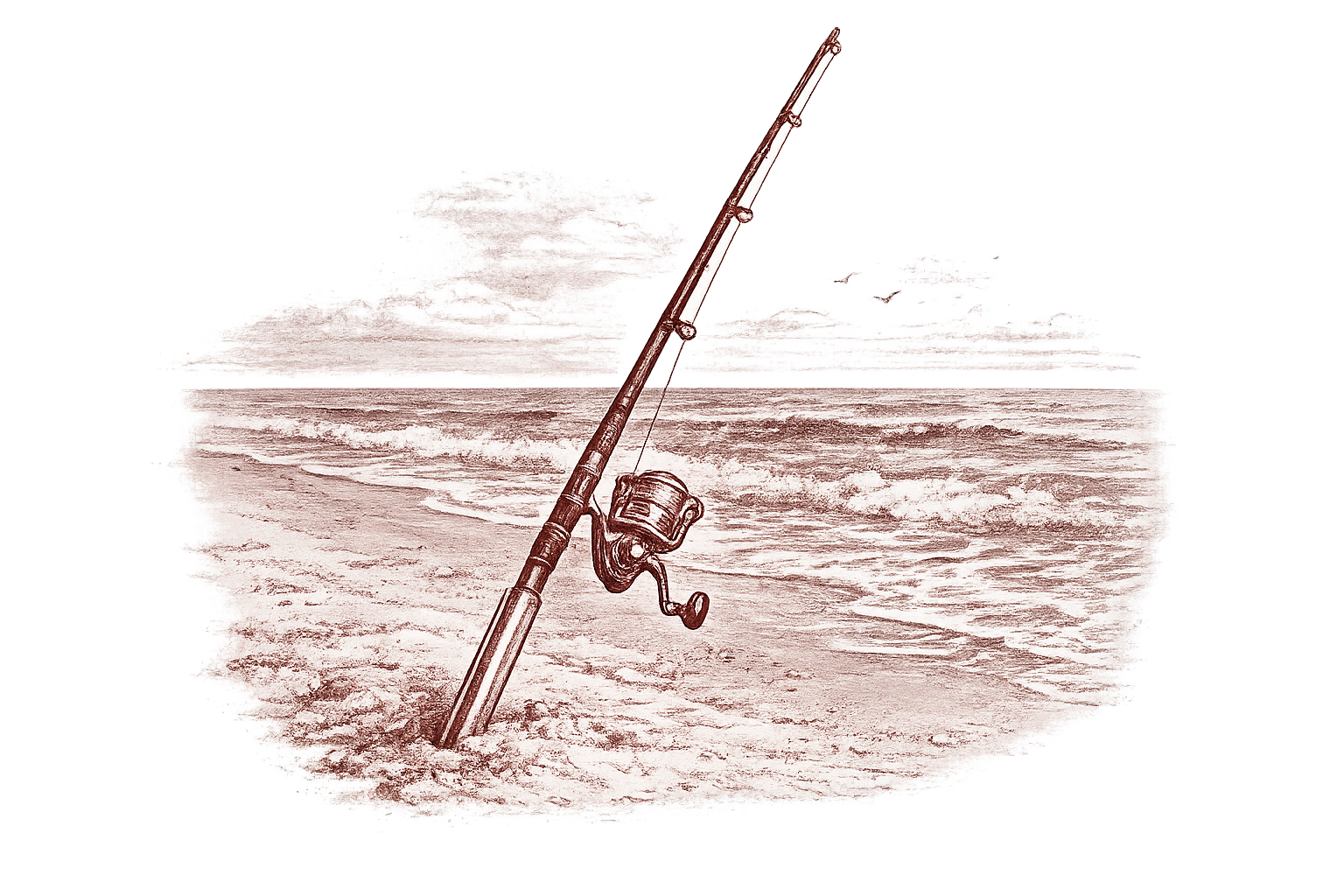
6. Sand Spike
A sand spike is one of the most overlooked pieces of surf fishing equipment.
Instead of holding your rod for hours, simply push the sand spike into the beach and place your rod inside.
This allows you to:
- Watch multiple rods
- Keep your reel out of the sand
- Relax while waiting for bites
- Quickly notice when a fish picks up your bait
For the price, it’s one of the best investments a beginner can make.
7. Tackle Bag
You don’t need a giant tackle box to fish the surf.
A medium-sized tackle bag with a few utility trays provides plenty of room for hooks, sinkers, leaders, rigs, tools, and extra line.
Choose one with water-resistant material and multiple compartments so your gear stays organized throughout the day.
8. Sun Protection
Surf fishing often means standing on an open beach for hours with little or no shade.
Protect yourself by bringing:
- A wide-brim hat or fishing cap
- Polarized sunglasses
- Sunscreen
- A lightweight long-sleeve fishing shirt with UV protection
Staying protected from the sun helps you fish longer and makes every trip much more enjoyable.
9. Bucket or Cooler
A five-gallon bucket or small cooler serves multiple purposes on the beach.
You can use it to:
- Carry bait
- Store drinks and snacks
- Keep your catch fresh
- Hold extra gear
- Double as a seat during slower fishing periods
Many experienced surf anglers won’t head to the beach without one.
Final Thoughts
The best part about surf fishing is that you don’t need an expensive collection of gear to get started. A quality rod and reel, the right fishing line, a handful of proven terminal tackle, fresh bait, and a few essential accessories are enough to catch fish on beaches all over the country.
As you gain experience, you’ll naturally add more equipment to your collection. But in the beginning, keeping your setup simple allows you to focus on what really matters—learning to read the surf, finding fish, and enjoying your time on the water.
Leave a Reply