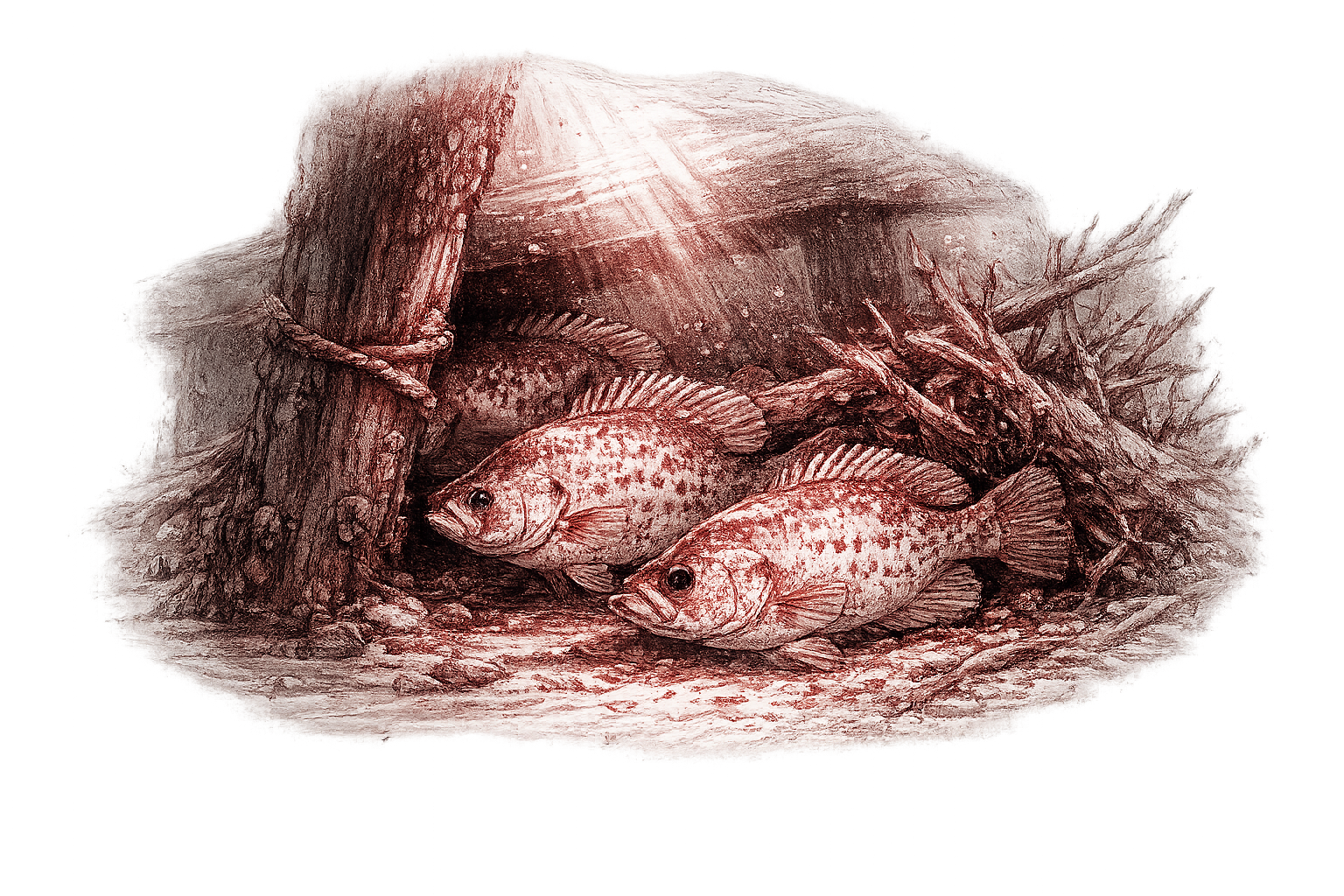
Summer is one of the best times of year to catch crappie—if you know where to look. One of the most common questions anglers ask is, “How deep are crappie in the summer?” The truth is there isn’t one magic depth. Crappie position themselves based on water temperature, available oxygen, baitfish, and nearby cover.
Instead of focusing on an exact number of feet, successful anglers focus on the conditions that determine where crappie will hold. Whether you’re fishing a shallow natural lake or a deep reservoir, understanding these summer patterns will help you find fish much faster.
Morning
Early morning is often the most active feeding period of the day. Cooler overnight temperatures and low light encourage crappie to leave their daytime holding areas and move higher in the water column to feed.
During this window, check shallow brush, dock edges, standing timber, and the upper portions of deeper structure. Crappie are generally more willing to chase a bait, making this an excellent time to cover water until you locate an active school.
As the sun climbs higher, expect fish to gradually slide back toward deeper water or heavier cover.
Midday
By midday, summer heat and bright sunlight push crappie into predictable holding areas. Rather than roaming, they often suspend around cover that provides shade, security, and easy access to baitfish.
This is when precision becomes important. Instead of casting randomly, focus on pieces of structure that consistently attract fish, such as brush piles, docks, bridge pilings, creek channels, or standing timber.
If you’re using electronics, look for fish suspended around cover instead of sitting directly on the bottom.
Evening
As temperatures begin to cool and sunlight fades, crappie often become more active again. Many fish will move higher in the water column to feed before dark, especially if baitfish become active.
Evening can be an excellent time to revisit productive brush piles, docks, or bridge structure that seemed inactive during the middle of the day. Often the fish never left—they simply became more willing to feed.
The Thermocline
One of the biggest factors influencing summer crappie is the thermocline.
As lakes warm throughout the summer, many develop a layer where water temperature changes rapidly. Below this layer, oxygen levels often become too low for crappie to remain for extended periods.
Because of this, crappie generally position above the thermocline, even if there appears to be attractive cover below it. Learning to identify the thermocline with your electronics can eliminate a large portion of unproductive water and help you concentrate on the depths where fish are most likely to be.
Not every lake develops a strong thermocline, but when one exists, it often dictates where crappie spend the majority of the summer.
Brush Piles
If there is one type of cover every summer crappie angler should search for, it’s brush piles.
Brush provides shade, attracts baitfish, and offers protection from predators, making it one of the most reliable places to locate crappie throughout the summer.
Rather than looking for a specific depth, focus on brush that’s positioned near creek channels, drop-offs, points, or other areas that give fish quick access to deeper water. If one brush pile isn’t holding fish, keep moving until you find one that is. Crappie often school tightly, meaning one pile may be loaded while another nearby is empty.
Docks
Boat docks continue to produce fish long after the spring spawn ends.
The best summer docks usually offer shade throughout much of the day and are located over relatively deep water or close to a channel swing. Many anglers also place brush beneath their docks, creating an ideal combination of cover and shade.
Crappie often suspend under the darkest parts of the dock rather than sitting on the bottom, so presenting your bait at the same depth as the fish is often more important than fishing directly below them.
Bridges
Bridges are natural fish magnets during the summer.
Bridge pilings create shade, break current, and provide vertical structure that attracts both baitfish and crappie. Fish may suspend beside the pilings, hold around nearby brush, or position along adjacent creek channels depending on conditions.
If the bridge crosses deeper water, it can remain productive throughout the hottest months of the year. Bridges also allow anglers to efficiently fish multiple pieces of structure until they locate an active group of fish.
Final Thoughts
When anglers ask, “How deep are crappie in the summer?”, the better question is, “What depth are they comfortable at today?”
Summer crappie don’t choose a specific depth simply because it’s summer. They follow comfortable water, adequate oxygen, available baitfish, and quality cover. By understanding how the time of day, the thermocline, brush piles, docks, and bridges influence their behavior, you’ll spend less time searching and more time catching fish.
Forget chasing a magic number on the depth finder. Instead, learn to identify the conditions that concentrate crappie, and you’ll be able to find them on almost any lake throughout the summer.
Leave a Reply