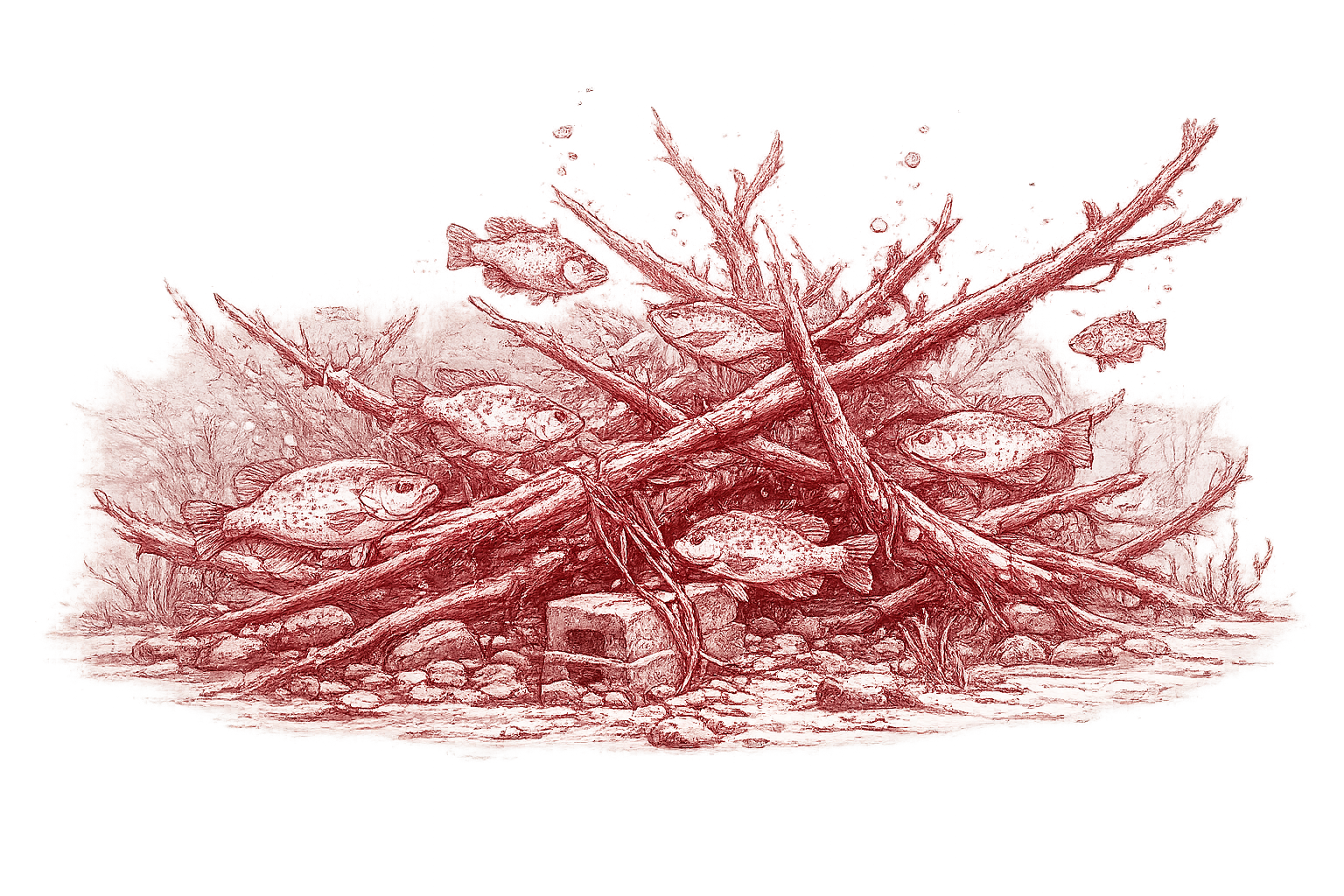
Crappie are known for gathering around cover, and few types of cover are better than brush piles. Whether they are naturally fallen trees or man-made brush placed by anglers, these underwater structures provide food, shade, and protection from predators. If you’ve ever watched someone consistently catch crappie while you struggle to get a bite, there’s a good chance they knew how to fish a brush pile correctly.
In this guide you’ll learn where to find brush piles, the best tackle to use, and the techniques that will help you put more crappie in the boat.
Why Crappie Love Brush Piles
Brush piles attract baitfish, insects, and other small organisms that crappie feed on. The branches also give crappie a place to hide from larger predators while waiting to ambush passing prey.
Crappie often hold deep inside the thickest part of the cover during bright, sunny days. Early in the morning, late evenings, or on a cloudy days, they’ll often move towards the edges to feed.
Where to Find Brush Piles
Learning how to find brush piles is often harder than learning how to fish them.
Most beginners make the same mistake—they see a fallen tree along the bank, cast to it for a few minutes, get hung up several times, and leave wondering where all the crappie are.
The truth is that the best brush piles usually aren’t visible from the surface. Many are sitting in 10 to 25 feet of water along creek channels, underwater points, bridge pilings, or near boat docks. Some were placed there by anglers years ago, while others are natural trees that washed into deeper water.
Once you learn where these hidden brush piles are located, you’ll start catching more crappie consistently.
1.Fish/Depth Finders
Finding good brush piles are very difficult without fish finders. The technique I like to use is I will slowly troll (try not to spook the fish) and when you see a brush pile pop up on the fish finder, throw a marker buoy out. This way you know where the brush piles is and you can easily focus in on the brush pile.
To some people it is very discouraging that they need to rely on a depth finder. I understand fully that it is very discouraging because a lot of people simply don’t have fish finders. But the alternative will definitely help you find brush piles with ease.
2. Make your Own Brush Piles
This is the way the old timers would fish for crappie. They would make their own brush piles and drop them in a spot where they thought crappie would be. Good places to drop them would be:
- Around Boat Docks
- Along Creek channels
- Near Bridge Pilings
- On Underwater Points
- Drop Offs
Always make sure you do your research before you drop brush piles in public lakes and make sure it is legal.
Brush piles are easy to make by tying cedar trees or hardwood limbs to concrete blocks so they sink and stay in place. Place them near creek channels, points, or drop-offs where crappie naturally travel, and they’ll provide cover that attracts and holds fish year-round.
The Best Tackle for Brush Pile Fishing
You don’t need expensive gear to catch crappie.
A good setup includes:
- A ultralight-light spinning rod
- A 1,000 to 2,000 size spinning reel
- 6-pound (or less) monofilament line
- 1/16 Jig heads
- Soft Plastic Crappie Jigs
- Live Minnows
The Best Techniques
Vertical Jigging
Vertical jigging is one of the most effective ways to fish a brush pile.
Position your boat/kayak directly over or slightly beside the cover. Lower your jig until it reaches the depth where fish are holding. Lift the rod tip slowly, then allow the jig to fall on a tight line.
Most bites happen at the fall.
Casting to Brush
If the fish are spooky or the water is shallow, cast beyond the brush pile and retrieve your jig slowly through the branches.
Pause occasionally and let the jig fall naturally. This often triggers bites from suspended crappie.
Fishing with Minnows
When crappie aren’t aggressively chasing jigs, a live minnow can be hard to beat.
Hook the minnow through lips or behind the dorsal fin and lower it barely above the brush. Keep your presentation as natural as possible.
Common Mistakes
Many anglers make the same mistakes when fishing brush piles.
- Fishing too Quickly
- Using line that’s too heavy
- Leaving after only a few casts
- Only fishing one side of the brush pile
- Making too much noise with the boat
- Using dead minnows
Slow down and thoroughly fish every side of the structure before moving on.
Seasonal Tips
Spring
Crappie move shallow to spawn and often relate to brush near spawning flats. You might catch a good bit at fallen trees near the shore.
Summer
Fish deeper brush piles near creek channels and drop-offs. Early morning and late evenings are usually the most productive times.
Fall
Schools begin chasing baitfish again and often suspend around brush in mid-depth water
Winter
Crappie typically group tightly around deep brush piles. Fish slowly and keep your bait in the strike zone longer.
Final Thoughts
Brush piles have helped me catch more crappie than just about any other type of cover. The hardest part is finding them, but once you build a handful of productive spots, you’ll have places to fish year after year.
Whether you’re vertical jigging, casting a soft plastic, or fishing a live minnow, slow down and fish every side of the cover. Many anglers leave too soon, but some of the biggest crappie in the lake are buried deep inside the thickest part of the brush.
The next time you head to the lake, don’t just fish the shoreline. Spend a little time looking for brush piles first—you’ll probably spend a lot more time catching crappie afterward.
Leave a Reply